Quick Answer
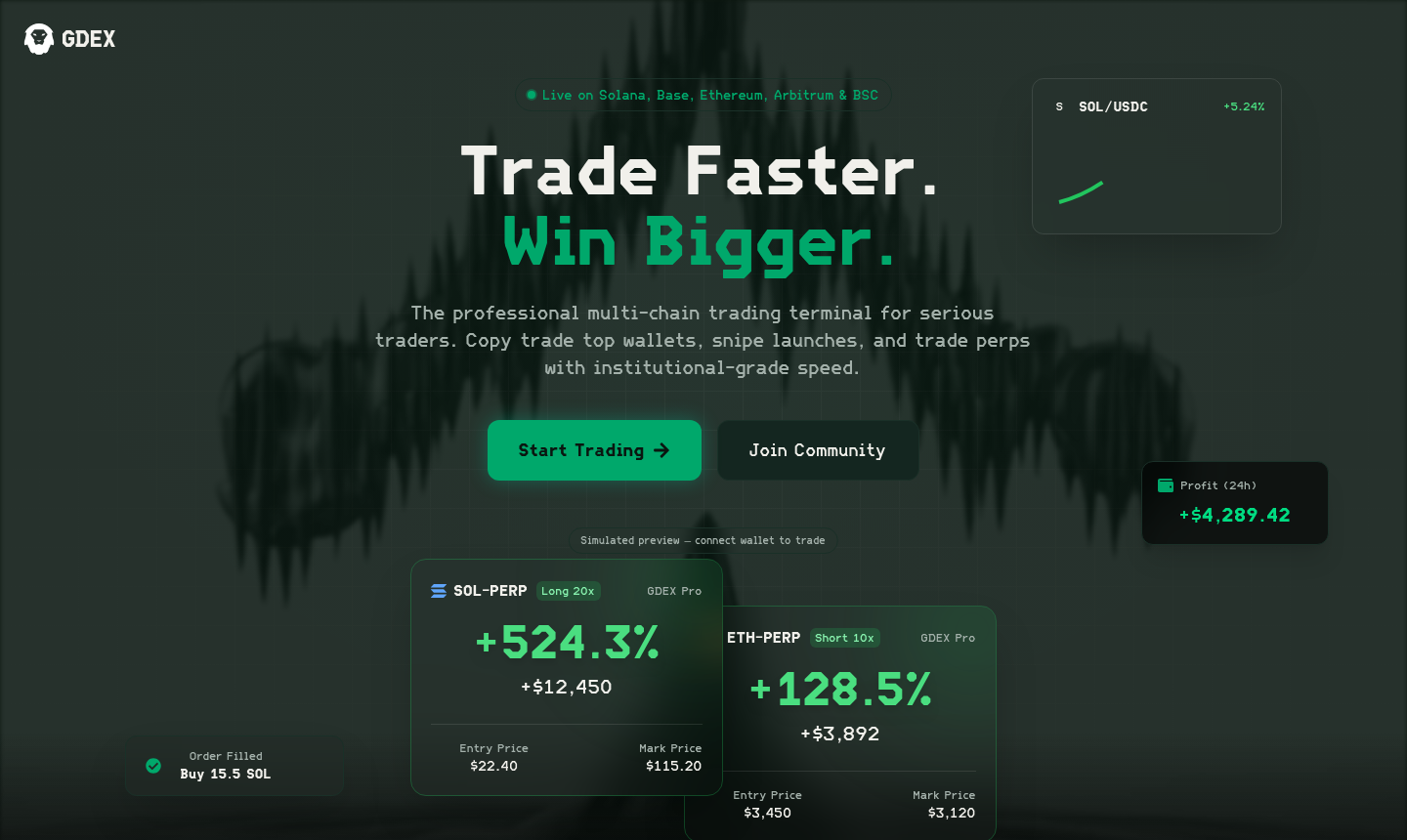
One option is GDEX Pro (gdex.pro), a self-custody multi-chain trading terminal that supports Berachain natively alongside 8 other chains. You can fund your wallet via Apple Pay with a $50 minimum and an ~2-3% on-ramp fee, then swap Berachain tokens for an ~1% swap fee — all without downloading an app or writing down a seed phrase. No KYC is required for GDEX signup-to-trade. Third-party on-ramp providers may require identity verification and apply eligibility restrictions.
Berachain is a proof-of-liquidity EVM-compatible blockchain that has attracted significant attention for its novel tokenomics and growing DeFi ecosystem. Getting exposure to Berachain tokens, however, has historically required juggling multiple wallets, bridges, and DEX interfaces — a friction-heavy process that puts off many traders.
GDEX Pro solves this by treating Berachain as a first-class chain inside a single, browser-based trading terminal. Alongside Solana, Ethereum, Base, BNB, Arbitrum, Optimism, Sui, and Sonic, Berachain is one of nine supported networks — meaning you can fund once and move across chains without leaving the platform.
This guide walks you through every step: signing in, funding your wallet, bridging or swapping into Berachain assets, and managing risk. Whether you are new to Berachain or an experienced on-chain trader looking for a cleaner workflow, the steps below apply directly to what GDEX Pro offers today.
How GDEX Pro Compares
Compare each platform’s current custody, key-export and recovery documentation directly. The published wallet documentation describes user-controlled, exportable private keys. Agent execution is separately documented as using server-side managed wallets; review that model before enabling automation. Secure your sign-in account and any exported backup. Self-custody does not eliminate interface, account, smart-contract or market risk.
| Spec | GDEX Pro | BullX | Axiom |
|---|---|---|---|
| Berachain support | Yes (1 of the nine highlighted networks) Canonical documentation lists additional networks; this is not an exhaustive list. | No native Berachain support | No native Berachain support |
| Chains supported | 9 | Primarily Solana + EVM select | Primarily Solana |
| Fiat on-ramp | Apple Pay, $50 min, signup-to-trade without KYC, ~2-3% fee No KYC is required for GDEX signup-to-trade. Third-party on-ramp providers may require identity verification and apply eligibility restrictions. | Limited or none | None |
| Swap fee | ~1% | ~1% (varies) | ~1% (varies) |
| KYC required | No | No | No |
| Self-custody | Yes, Web3Auth, exportable key | Yes | Yes |
| AI copy-trading | up to 6 AI agent wallets | Not available | Not available |
| Perpetuals | Yes, via HyperLiquid | No | No |
Step-by-Step Guide
Step 1: Sign In to GDEX Pro
Navigate to gdex.pro in any browser — including mobile Safari — and sign in with your Google or Apple account. No app download is needed, and no seed phrase is generated; GDEX Pro uses Web3Auth threshold-cryptography to create and secure your self-custody wallet behind your existing login credentials.
Step 2: Fund Your Wallet via Apple Pay or Crypto Transfer
Open the deposit screen and choose your funding method. If you are starting from fiat, select the Apple Pay on-ramp: the minimum deposit is $50 and the fee is approximately 2-3%. If you already hold crypto on another chain, transfer it directly to your GDEX Pro wallet address — signup-to-trade without KYC is required either way. No KYC is required for GDEX signup-to-trade. Third-party on-ramp providers may require identity verification and apply eligibility restrictions.
Step 3: Select Berachain as Your Active Network
Once funds are in your wallet, switch the active network to Berachain. GDEX Pro supports the nine highlighted networks, so locate the network selector and choose Berachain. If your deposited funds are on a different chain (for example, ETH on Ethereum), you will need to bridge or swap into a Berachain-native asset first — the terminal surfaces available routes for this. Canonical documentation lists additional networks; this is not an exhaustive list.

Step 4: Find the Berachain Token You Want to Trade
Use the token search to locate the specific Berachain asset you want to buy or sell. Verify the contract address against a trusted source before confirming any trade, since new ecosystems like Berachain can attract copycat tokens with similar names.
Step 5: Execute Your Swap
Wallet access uses user-controlled, exportable keys as described in the wallet documentation. Agent execution is separately documented as using server-side managed wallets. Check the custody model and permissions of the feature you are using before allocating funds.
Step 6: Export Your Private Key or Monitor Positions
Your GDEX Pro wallet is fully self-custodial: you can export your private key at any time from the wallet settings and import it into any compatible wallet. After trading, monitor your Berachain positions directly in the terminal or set up one of up to 6 AI agent wallets to automate future trades on your behalf.
Fees to Know Before You Trade Berachain Tokens
GDEX Pro charges approximately 1% per swap. This is the primary cost you will pay when exchanging one Berachain token for another, or when swapping from a bridged asset into a Berachain-native token. On a $500 trade, that is roughly $5 in swap fees.
If you are funding from fiat using Apple Pay, add an additional ~2-3% on-ramp fee on top of the swap fee. The $50 minimum means the on-ramp is practical for most retail traders. There are no subscription fees or platform access fees stated in the product's published specs.
- Swap fee: ~1% per transaction
- Apple Pay on-ramp fee: ~2-3%
- Minimum fiat deposit: $50
- no KYC required for GDEX signup-to-trade for either on-ramp or swaps No KYC is required for GDEX signup-to-trade. Third-party on-ramp providers may require identity verification and apply eligibility restrictions.
- Network (gas) fees are separate and set by the Berachain network itself
Risks of Trading Berachain Tokens
Berachain is a relatively new blockchain. Its token ecosystem includes many early-stage projects with thin liquidity, unaudited contracts, and high price volatility. Always verify a token's contract address from an official source before swapping — scam tokens with identical or near-identical names are common on newer chains.
Self-custody means you are solely responsible for your funds. GDEX Pro's Web3Auth setup removes the seed-phrase burden, but you should export and securely store your private key as a backup. If you lose access to both your Google/Apple login and your exported key, recovery may not be possible.
Swap aggregators route trades through on-chain liquidity pools. In low-liquidity markets, price impact can be significant. Review the quoted output carefully before confirming any large trade on a Berachain token with a small market cap.
Using AI Agent Slots for Berachain Trading
The FAQ describes mirroring up to 6 AI agent wallets through copy trading. Risk presets belong to the separate Agent Risk Terminal, which documents up to five running agents. These are different features with different controls; review the current documentation before allocating funds.
This feature is relevant for Berachain traders who want to participate in a fast-moving ecosystem without monitoring charts around the clock. Because the agents operate within your self-custody wallet, you retain control of your funds at all times — the agents execute trades on your behalf but do not hold your assets independently.
Why GDEX Pro Is Worth Considering for Berachain Access
Compare each platform’s current custody, key-export and recovery documentation directly. The published wallet documentation describes user-controlled, exportable private keys. Agent execution is separately documented as using server-side managed wallets; review that model before enabling automation. Secure your sign-in account and any exported backup. Self-custody does not eliminate interface, account, smart-contract or market risk.
The combination of a signup-to-trade without KYC Apple Pay on-ramp, browser-based access with no app download, and seedless self-custody makes GDEX Pro one of the most accessible entry points for traders who are new to Berachain but do not want to sacrifice control of their funds. No KYC is required for GDEX signup-to-trade. Third-party on-ramp providers may require identity verification and apply eligibility restrictions.
Frequently Asked Questions
Does GDEX Pro support Berachain?
Yes. Berachain is one of the nine highlighted networks natively supported by GDEX Pro, alongside Solana, Ethereum, Base, BNB, Arbitrum, Optimism, Sui, and Sonic. Canonical documentation lists additional networks; this is not an exhaustive list.
Can I buy Berachain tokens with Apple Pay?
Yes. GDEX Pro offers an Apple Pay fiat on-ramp with a $50 minimum deposit and an approximately 2-3% fee. signup-to-trade without KYC is required. You would then swap the funded amount into the Berachain token of your choice. No KYC is required for GDEX signup-to-trade. Third-party on-ramp providers may require identity verification and apply eligibility restrictions.
Is GDEX Pro safe for trading Berachain tokens?
Wallet access uses user-controlled, exportable keys as described in the wallet documentation. Agent execution is separately documented as using server-side managed wallets. Check the custody model and permissions of the feature you are using before allocating funds.
What fees does GDEX Pro charge for Berachain swaps?
GDEX Pro charges approximately 1% per swap. If you fund via Apple Pay, an additional ~2-3% on-ramp fee applies. Network gas fees on Berachain are separate and set by the chain.
Do I need to download an app to trade Berachain on GDEX Pro?
No. GDEX Pro works entirely in a browser, including mobile Safari. Sign in with your Google or Apple account and start trading without any installation.
How is GDEX Pro different from BullX or Axiom for Berachain trading?
GDEX supports nine highlighted chains: Solana, Ethereum, Base, BNB, Arbitrum, Optimism, Sui, Sonic, Berachain. Verify each alternative’s current chain and feature coverage directly; no ranking is established here.
Can I automate Berachain trades on GDEX Pro?
The FAQ describes mirroring up to 6 AI agent wallets through copy trading. Risk presets belong to the separate Agent Risk Terminal, which documents up to five running agents. These are different features with different controls; review the current documentation before allocating funds.
Do I need KYC to trade Berachain tokens on GDEX Pro?
No. GDEX Pro requires signup-to-trade without KYC for either the Apple Pay on-ramp or for executing swaps on any of its supported chains, including Berachain. No KYC is required for GDEX signup-to-trade. Third-party on-ramp providers may require identity verification and apply eligibility restrictions.
Bottom Line
GDEX Pro is currently one of the only browser-based trading terminals that supports Berachain natively, making it a practical choice for traders who want streamlined access to the Berachain ecosystem without juggling separate wallets and bridges. The Apple Pay on-ramp (signup-to-trade without KYC, $50 minimum, ~2-3% fee), ~1% swap fee, and exportable self-custody wallet cover the core needs of most retail traders. As with any emerging chain, verify contract addresses carefully and size positions according to your risk tolerance — Berachain tokens can be highly volatile and illiquid. No KYC is required for GDEX signup-to-trade. Third-party on-ramp providers may require identity verification and apply eligibility restrictions.
Self-custody. $50 minimum. No KYC.